Life science in Buddha.
Loading video player...
Life science in Buddha.
——Ph.D. Forum, Nanjing University
"The night of March 14, 2011"
Statement by the moderator:
It is a great honour for us today at the Ph.D. Forum of the Department of Philosophy and Religious Sciences of Nanjing University to have the distinguished Sodaji Kampuchea from the Faipule. Inpoche is going to give us a life science of Buddha tonight. Before doing so, allow me to introduce to you the distinguished Inpoche:
At a young age, Inpoche went to a teacher-training school, where he followed the fundamental teaching of Lord Mae Peng Tsao to practise Buddha. Inpoche is in deep hiding, reaching the depth and breadth of the law of Buddha. As a result of its tragic impetus, the cause of Inmbochehongfali was spread both within and outside the sea. This can be borne out not only by the writings of his peers, but also by the various charitable and caring activities of society that he advocates and carries out physically.
It is both the heart and the honor of our Lord Nam to be invited to perform the Buddha's Law by such a man of good and compassion. South China's tradition of "practical" and "self-serving" is based on the belief that the highest value of all learning lies in the attainment of wisdom and the advancement of life. South Da has a "know-how house" and Nan is more "know-it-all" tradition and pursuit, so let's look for real spirit and open heart to listen to Fafaganlu, and use our mind and mind to learn how to turn knowledge of books into living experiences and to generate wisdom.
Now, let's give a big round of applause for Inpoch.—
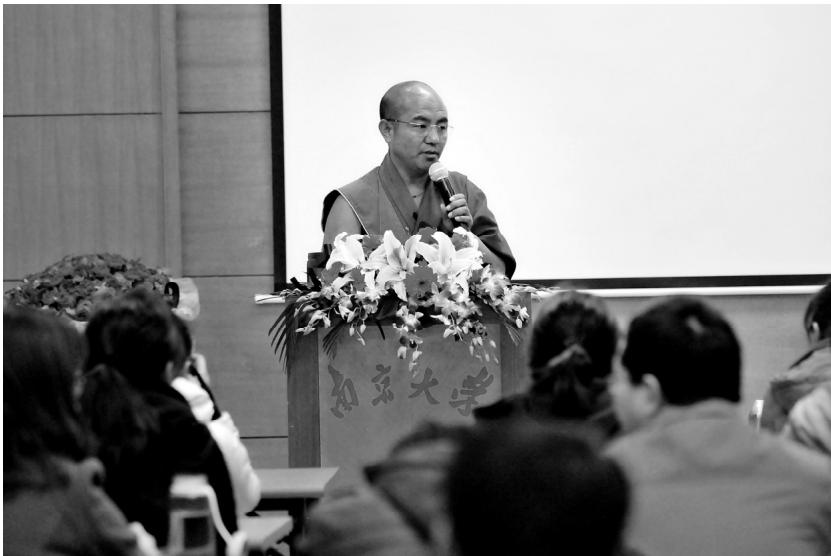
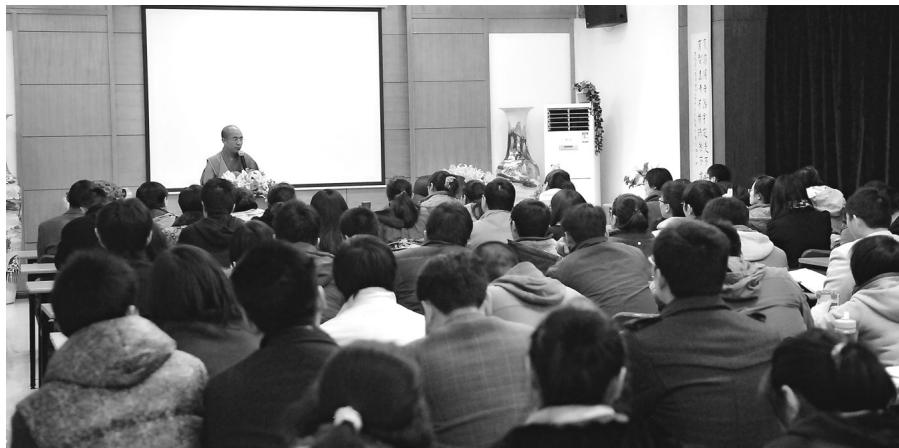
Ladies and gentlemen,
Good evening! It's a pleasure to share with the students and teachers of the Ph.D. Forum of the Faculty of Religious Sciences at Nanjing University.
I myself was in Nanjing more than a decade ago, since 1994. Because of the Nanjing Yangtze Bridge, which was included in the textbooks of the time of study, the bridge was also visited and never came here again. After this visit, it was discovered that Nanjing had changed considerably, with new developments in external materials and architecture, but it was not clear that the moral aspects of kindness and tolerance within Nanjing had been raised. Anyway, today teachers and classmates asked me to talk about Buddhist life science, and I'm going to discuss it with you.
I. What is Buddhist life science?
Buddhist life science, if chosen according to Buddha’s wisdom, i.e., that any life has an incalculable last and future life, or until it is eliminated, will continue in six ways.
The understanding of such a deep case requires long-term research, reflection and justification. But since we are all intellectuals, we should have an open-minded and in-depth analytical capacity. Well, let's see if there's any.
This question is very important to everyone! If we had not lived, we could have lived a day of our lives; but if there had been a Hereafter, you would not be prepared for it now, and will surely regret it later.
So, do we have it all? Through long and detailed research, we have found it to be real, but unfortunately many people in the world know nothing about it. Of course, there is a good reason for those who have no knowledge not to understand this, but it is a sad thing for humanity that some intellectuals consider themselves to be superb, well-informed and unacknowledged.
In fact, historically, from time immemorial, successive statements have existed in human society. The ancient Romans and the ancient Greek philosophers recognized the existence of the world. Plato, for example, believes that a person's soul after death, in accordance with what was done before, is transformed into a human or other human being. And in the ancient Chinese culture, Confucius thought did not deny its legitimacy, and Confucius was asked: "What is a man after death? Confucius replied: "What is unknown, what is known?" In words, Confucius avoids talking because he advocates active accession, and is neither certain nor certain about what follows. As for other religions, most acknowledge positively the existence of the past and the present, for example, the desire of the Taoists for immortality; Christianity and Catholicism believe that when a man dies, the builders of good will rise to heaven, and the makers of evil will go to hell.
See, it's not just a Buddhist patent. The scope of this concept is in fact very wide-ranging and spread across many religions in the world. If you have never thought about this before, it would be useful if you could look at the books of ancient cultures and see how they are analysed in other religions or philosophies.
II. SCIENTIFICS AND RELEVANTS
Not only did the ancient sages recognize the past and the future, but the great scientific giants who had made a significant contribution to humanity in recent times and had contributed to history, the vast majority of them also believed in religion and recognized that view. For example, in the United States, a Mr. Galloup, who had investigated the beliefs of 300 of the most prominent scientists in the past 300 years, found that 242 of them believed in religion, 20 did not believe in religion and 38 were unable to determine their attitude towards religion. In other words, 92% of scientists have religious beliefs. In particular, among Nobel laureates, religious believers account for 93.27 per cent.
Today, many intellectuals believe that scientists are the most rational people to recognize any religion. But that idea was reversed by the data. Whether Einstein, Newton, Galileo or Edison, they are not only religious, but are also very keen. Even though Buddhism had not yet entered the West, and religion was predominantly Christian, the concept that existed before and after was widely accepted.
In fact, for a person who does not recognize his or her past life, he or she feels that he or she will not be able to live for decades. Guided by this vision of the world and by this vision of life, there is no restraint in what they do and do whatever they wish for the good of the present life, as the Sino-Arab Acronym describes it: "No fear, no evil."
In turn, many countries in the West are very different in terms of their own religion. The new President also caressed the Bible at the inauguration ceremony and vowed before God. Such a move, which may seem superstitious to those who do not believe in religion, seems to be excessive, but in practice, one does need such a moral constraint.
Do faith, then, create obstacles to social progress and human development? Absolutely not, because they are not. The United States invented King Edison (Thomas Alva Edison, 1847-1931), a man of strong faith. He had a tablet in his lab, etched on it: "I am convinced of the existence of a God of all minds, all-powerful, all-powerful and all-highness." His life consisted of more than 2,000 inventions, but instead of preventing him from his faith, he believed that praying to God was the source of power whenever he encountered difficulties.
Now some people are studying Buddhist books, reading Buddha's books, or reading them in a school, and there's probably a pointer around them saying he's "too obsessed" or "brainwashed." It's not bad to be brainwashed, because many great scientists are more thorough and intelligent than they are.
However, the lack of understanding of religion among many is partly related to Darwin's evolution. The theory of evolution completely negates the causes and consequences of the past and the present. It promotes "the choice of nature, the survival of the fittest" and considers that everything comes by chance. The doctrine was a worldwide shock, and Charles Robert Darwin, 1809-1882, was famous for it. However, according to some sources, he was often ill in his old age, and the child was also an idiot, and eventually turned to theology and wrote a confession to God. Before he died, he said, "I look at the world, especially human material, and I don't agree that the world is dominated by forces without purpose." This arbitrary view, I believe that the world is bound to have an all-embracing, all-embracing, all-embracing rule of the universe."
There is also Galileo (Galileo Galilei, 1564-1642), an astronomer who has traditionally believed that there is no contradiction between religious beliefs and scientific convictions. When he discovered the Sun Black, Jupiter's moon, the mountains on the moon, he wrote with joy: "I am shocked, I am eternally grateful to God, and he has made me try to find something so great that I have not known for centuries!"
That is why so many scientists, like those who contribute to humanity, are convinced that their beliefs and science will not be in conflict, and we, the comprehensible ones, should not be blindly oblivious to what we do not understand.
In other words, when there is no faith, man loses moral restraint and does terrible things, and when there is faith, evil thoughts will be dealt with, not only for the spiritual happiness of this life, but also for the liberation of this world.
It's important.
It is therefore up to everyone here to look at what is the most valuable doctrine in the world. If you want to know the secrets of the heart and the truth about the universe, it is necessary to draw on the wisdom of religion, especially Buddhism. Otherwise, it might not be possible to solve the confusion for many years of research on its own. I was at a school the other day, quoting former Dean of the Chinese University of Science and Technology, Dr. Chu Qing, what did he say? "Scientists have been waiting here for a long time to climb to the top of the mountain!" The phrase was quite significant, and you people of science should think deeply.
For my part, I am not a scientist, but I have spent a great deal of time hunting for many books in and out of history, and I have read many books about Buddhism. In the process of comparing the two, I was deeply convinced by the wisdom of Buddha, and confidence was growing. Now there are many people in the world who read a Buddhist book and claim that "Buddhist is superstitious" without knowing that they are truly superstitious when they say it so easily. In history, there are so many scientists and wise men who are ready to worship and defy Buddhism, and how can you open your mouth to such deep-seated faith?
In fact, the psychological sciences revealed by Buddhism are highly valued in Western countries. In particular, the psychologist Carl G. Jung, 1875-1961, whose influence is no less than the sigmund Freud, 1856-1939.3To date, many psychologists have given him an unparalleled assessment. So, what's Jung's attitude to Buddhism? For decades, he has been carrying the Tibetan Book of Death to his side as a partner of his own. He attributed many of his inspirational ideas and discoveries to the Buddha and zealously recommended the book to academic giants such as Freud and Einstein.
那天我遇到一个剑桥大学的朋友,他还告诉我:荣格在离开人世前,曾谆谆叮嘱女儿:“我现有的谈论《西藏度亡经》的这些书,包括描述梦境的各种理论,过 50 年后才可以出版,不然,现在人们不一定能接受。”他这样做确实很有远见,因为当时的欧洲,并不像今天这样包容、自由、开放。不过他也很清楚,再过一段时间,东方的宗教将会在西方遍地开花,到了那个时候,他对《西藏度亡经》的研究,以及自己所体验的梦光明和濒死经历,完全可以得到印证。
在我们藏地,《西藏度亡经》可以说是家喻户晓,它不仅仅是一种佛教思想,而且已融入了人们日常生活的行住坐卧中。然而现在很多知识分子,完全把它当成一种迷信,用比较奇怪的行为对待它。这样的傲慢态度,跟往昔的许多智者比起来,确实有云泥之别。因此,这方面值得大家深思!
三、寻找前世的印迹
对每一个众生而言,实际上生命都是延续不断的,而绝对不会人死如灯灭。我们的生命分为身体和心识,其中身体分粗大的身体、细微的身体,心识也分粗大的心识、细微的心识。
粗大的身体,是由地水火风四大所构成,原本人们对此不太相信,但 15 世纪后通过化学分析,确实发现人体是由各种化学元素组成的。这个四大构成的粗大身体,在人死之后就会灭尽,灭尽后会变成什么呢?变成一种细微的身体,佛教称之为意幻身。它相当于我们梦中的身体,轻飘飘的,想到哪里马上就能到,跟现在的肉身有一定差别。
然后,粗大的心识分为眼识、耳识、鼻识等,这些逐渐融入一个阿赖耶识,这叫做细微的心识,它会不断在轮回中流转。关于这种细微的心识怎样延续,这辈子变成人,下辈子变成牦牛,再下辈子变成什么什么……在藏传佛教的《时轮金刚》中均有详述。
当然,前后世的存在,不一定非要让你眼睛看得见、耳朵听得到,若是这么简单的话,那也不叫心的奥秘了。但你如果想了解这些,要么可以依靠推理进行论证,要么可通过有些人回忆前世,或者濒死现象、灵魂出窍来证明。
1、依因明推理前后世存在
倘若通过推理来证实,就必须要借助因明学,尤其是法称论师的《释量论》。此论讲了不管人还是其他众生,都有一种明清的心识,这种心识之所以会不断延续,原因就是具足了“因”——光明的相续不会断灭。
当然,这个刚学起来,稍微有点难,但它却是非常完整的推理方法。尤其是哲学思辩能力强的人,最好能看看《释量论》,还有《量理宝藏论》、中观的一些论典。通过这些方式进行抉择,你最后会完全明白,众生的心不可能无缘无故断灭。因为心不像外在的无情法,比如外在的灯泡,摧毁了就没有了,而心相续与之完全不同。
这些推理在因明中特别丰富,且颠扑不破。尽管学起来不太容易,但你若想透彻地研究,就肯定要从复杂的方面下手。否则,只是简简单单看一两本书,就断章取义地说“佛教承认后世”不成立,恐怕不会那么简单;你若跟一位佛教大师进行因明辩论,最后也不一定有必胜的把握。因此,大家如果想从理论上了解前后世,就应该深入研究因明和中观,这样才能得出真实的结论。
2、回忆前世的现实案例
此外,现实生活中还有不少人能回忆前世,这也是一个非常有力的依据。毕竟那是他自己想起来的,这个谁也无法否认。就像我说自己想起了昨天的事,别人不可能说我在胡说八道。他不信是他的事,但我确实有这种亲身体会。
佛陀在《十地经》中也明确讲过,有些众生可以回忆一世、二世、三世,乃至无量劫的前生往事4。当然,也不是每个人都有这种能力,对大多数人来说,入胎之后被胎障所蔽,就会忘记过去的一切。只有极少数的人,因为具有禅定的力量,或者特殊的因缘,才能保留一部分记忆。
当然,拥有前世回忆的人,也不一定非要学过佛。以前美国维吉尼亚大学的史蒂文森博士(Ian Pretyman Stevenson,1918-2007),经过四十多年的潜心研究,收集了来自不同国家的二千多个案例,用大量事实证明了前世存在的真实性。此后,他又从中选取了极富说服力的二十个案例,撰著了《二十个暗示转世的个案》一书,每个案例的时间、人物、地点都标得清清楚楚。如果有人想去一个一个否认,恐怕“工作量”会比较大。
在我们藏地,有些高僧大德也能回忆前世。像我的上师法王如意宝晋美彭措,经常在传法的过程中,忆起自己在莲花生大士时期身为降魔金刚的经历。记得有一次在道孚某地,法王传讲《六中阴》(《西藏度亡经》的一部分)时,讲着讲着,突然显得非常悲伤,说自己回忆起往昔莲花生大士是怎么讲的,当时身边有哪些弟子,而今已经时过境迁,变成了这个样子……上师一边讲一边流泪。
还有一次,上师应邀前往藏地的第一座寺院——桑耶寺。在为该寺僧众传法时,昔日莲花生大士来藏地传授密法的场面,就像昨日发生的事情一样历历再现。法王一边讲述当时的情景,一边老泪纵横,显得非常哀伤。这是我亲眼所见的事实,而且像法王这样对佛教事业具有如是贡献的人,也没有任何必要随便说妄语。
除了这些大德以外,也有个别普通人天生具有回忆前世的能力。在我们佛学院附近的一个地方,就有个小女孩,大概五六岁之前,对前世的事都记得清清楚楚。家人很难理解她是怎么知道的,后来将她所讲的内容进行核实,发现全部能对号入座。在这些事实面前,他们也不得不承认前世存在。
此外,有个文学家叫狄更斯(Charles Dickens,1812—1870),我们读书时还学过他的文章。他在一次郊外散步时,发现眼前见到的一切都非常熟悉,于是情绪激动,想起这是他前生被人谋杀的地方。
大文学家冷熟,也能清楚地记得自己在这世上已存在了无数岁月。在那些逝去的年岁中,他曾做过王子、奴隶、女人……而且未来还会一次又一次地重返人间。
还有苏东坡,能忆起自己前世是个出家人,名叫戒和尚。顺治皇帝也曾在《出家偈》中说:“我本西方一衲子,缘何落在帝皇家?”此外,《玉琳国师》的连续剧,尽管带有一些虚构情节,但却是改编自真实的历史。
所以,我们不能没有任何理由,就矢口否认前世的存在。倘若你对此心存怀疑,最好是看一些这方面的书。比如,慈诚罗珠堪布专门写过一部《前世今生论》,从科学、佛教两个层面对前后世存在进行了剖析,非常具有说服力。我读了之后觉得很好,就花了一两个月的时间,把它翻译了出来,并为学院的道友讲了一遍。
讲完之后,我跟很多知识分子说:“你们对于前世的存在,现在有没有推翻的能力?有的话,可以站出来。在真理面前,我们要以理服人,不能因为这是佛陀说的、上师说的,明明自己不信,却也不得不接受。真理必须经得起考验、经得起观察,这是佛陀一贯坚持的原则。”后来在互相辩论的过程中,很多人对前后世的存在,也真正生起了定解。所以,在座各位如果也有类似的疑惑,最好能系统学习这部论典。
另外,《西藏生死书》也很值得一读。1993 年,我去法国时,见过索甲仁波切(Sogyal Rinpoche,1947-)。当时他这本书是用英文写的,正准备要译成中文。他刚开始想让我翻译,我说自己一方面水平不够,另一方面时间特别紧,恐怕没办法,最好还是找比较出名的人。后来他找了台湾的郑振煌教授翻译中文,又请锡金的一位堪布译成藏文。但藏文版目前还没有看到,不知道进度怎么样了。当时我看那位堪布翻译到一半了,1993年离现在已有18 年了,也许他还没有翻译完——我有一个熟悉的美国人,8 年前他说正在写两本书。前几天又碰到他,他说还在写那两本书。所以,有些人也许是“慢工出细活”吧。
当时《西藏生死书》英文版的效果很不错,索甲仁波切就又将它译成德文,印了好几本书。恰好那天法王刚刚到他的道场,他观察缘起非常好,便将德文版的《西藏生死书》给法王一本,给我一本。但是我不懂德文,只好放在顶上加持一下。
索甲仁波切说当时西方很多人虽相信因果,但对前后世存在、面对死亡的概念比较欠缺,于是他就写了这本书,希望进一步提升他们的生死观。再后来大家也知道,西方人依靠这本书的引导,对生死确实有了新的认识。
因此,生死这么重大的问题,我们千万不能忽视。如果后世真的不存在,那今生得过且过,怎么懈怠都无所谓;但后世若是存在的话,你现在不为此积累资粮,就实在太愚笨了。就像一个人认为明天不存在,于是拼命睡懒觉、干坏事,对将来没有任何打算与规划,这完全是愚痴之辈。所以,对于这个问题,有没有必要经常去思维?大家不妨好好想一下。
3、承认前后世并非佛教一家之言
我们讲的前后世存在,实际上也不是佛教中才有。从历史上看,就算是没有佛教的地方,这种观念也经久不衰。比如,佛教还没有传入中国之前,大概在春秋战国、西汉时期,就记载了不少这方面的典型例子:《左传》中有齐公子彭生死后,变成野猪去报仇;《汉书》也讲了赵王如意在15 岁被吕后杀害,死后化为苍犬扑杀吕后;《晋书》中还有宋士宗之母变为鳖等事例。
既然严肃的正史中都有这些记载,大家就不要一听到“前世后世”,就认为是佛教在搞迷信,而应当站在公正客观的立场上,仔细分析这些道理!
四、当前人们对此的困惑
佛教的生死观,其实是相当深奥的。约翰·冯·纽曼博士(Dr.John Von Neumann,1903-1957)在量子学说内涵的哲学部分曾说:“人类具有一个非物质的意识力,能够影响物质的变化。”这个理论提出来之后,震惊了整个科学界,引起了大家的广泛关注。过去人们都认为“物质第一性”,物质可以创造一切,而到了如今,才发现佛教所讲的“万法唯心造”,与真相确实非常吻合。
人除了肉身以外,实际上还有生生不断的一种细微心识,它能产生不可思议的力量。这种力量,科学家恐怕暂时还没有触及,因为他们对心的探索仍是一片空白。现今科学所研究的对象,大多数是物质领域,而且必须要借助仪器。科学家虽然在物质方面,对人类有着巨大贡献,但心灵那块却是一片盲区。其实,他们若能研究一下佛教的《唯识论》、《俱舍论》、《阿毗达磨》,或者《华严经》、《法华经》,就很容易揭开这个谜底。
以前我在学校读心理学时,一直被很多问题困扰着,有些迷惑实在解不开。有时候去请教老师,跟他们进行辩论,结果却招致老师的不满,认为我在故意刁难。(听说有些心理学老师,现在仍对我意见蛮大。)后来我遇到了大乘佛教的经论,通过学习这些教理,包括大圆满密法,自己有种豁然开朗的感觉,很快就找到了一直寻觅的答案——“哦,原来是这样!没有佛教引导的话,那些理论再怎么宣说,也像盲人摸大象一样,始终无法指明正确的方向。”
曾有一位物理学家叫布赖恩·戴维·约瑟夫森(Brian DavidJosephson,1940-),是 1973 年诺贝尔物理学奖的得主。他每天都坐禅,以求进一步进入客观的内明状态。通过这种禅修,他发现了心的力量,并以此撰著成文,当时取得了多个奖项。我非常相信他的经历,如果依靠禅修认识心的奥秘,此时你应付外境也好、学术研究也罢,都会游刃有余、运用自如。反之,倘若你没有掌握这个最关键的问题,即使口头上再讲得天花乱坠,实际上也抓不到根本。
因此,大家平时要多观察自己的心,用佛教的一些窍诀、教言来对治烦恼。假如你能这么做,不要说来世的利益,仅仅是今生当中,面对生活、工作的各种压力时,心境也会大不相同。
有些知识分子心态非常糟糕,因为感情、工作、家庭不顺,经常想要自杀,但后来通过学习佛法,完全脱胎换骨、焕然一新了。这次我出来就碰到四个人,他们没遇到佛法前都准备自杀:一个是孩子在澳大利亚留学时,发生车祸成了植物人,她独自照顾,生活非常艰苦;一个是婚姻出现了危机;一个是因为工作和其他复杂的问题想不开;还有一个是秘密不能说。他们四个本来都不想活了,但因为遇到了佛法,心态得到了根本转变,事情虽然没什么变化,但自己从此不再怨天尤人,明白这一切都是因缘。
其实,这个世间就像《中观四百论》中所形容的:“于此大苦海,毕竟无边际,愚夫沉此中,云何不生畏?”沉溺在这样的轮回苦海中,作为凡夫人怎么可能不害怕?不承认前后世的人,暂时觉得生活很美好、很开心,可是当轮回的幻变在你身上一幕幕出现时,恐怕你不一定快乐得起来。
佛在《观佛三昧海经》中也讲过:“三界众生,轮回六趣,如旋火轮。”从这个教理可以看出,众生流转在六道轮回中,真的没有丝毫快乐,今生变成人,下一辈子就可能成了旁生,这样的无常变幻一直在上演。
前不久,我看了《中阿含经》的一则公案,看后对轮回产生了极大的厌离心。故事情节是这样的:有一天,佛陀去都提子家化缘,主人恰好出门了,他家养了一只白狗,正趴在珍宝装饰的床上,吃着金盘里的美食。白狗见佛陀进来,便跳下床,对着佛陀大声狂吠。佛陀怜悯地对它说:“你因过去造下恶业,今生堕落为旁生,如今怎么还不觉悟?”听了这个话,白狗闷闷不乐、不吃不睡,一直忧愁地蜷着。
都提子从外面回来,见白狗表现异常,就问家人:“我的狗今天怎么变成这样?”家人回答:“刚才佛陀来过。”都提子爱狗如掌上明珠,听到原因后火冒三丈,立刻跑去佛陀面前质问:“你干嘛无缘无故把我的狗弄成那样?”佛陀告诉他:“不要这样说,你的狗其实是你父亲都提的转世。如果不信,你可以回去问它前世埋藏的金银财宝在哪里。”
都提子满怀惊疑地回到家中,问白狗是不是父亲的转世,如果是,就请指示藏宝的地方。白狗即刻走到前世所止宿的地方,在床下用爪抓地,而且不断地吠着。都提子立刻亲自掘地,果然从地下挖出许多金银财宝。
都提子因此对佛陀生起无比的信心,于是前往佛陀那里请法。佛陀为他开示了因果规律,告诉他:“前世杀生的人,即生短命;前世放生的人,即生长寿;前世布施的人,即生获得财富;前世吝啬的人,即生变为贫穷;前世造善业的人,即生善心很容易增长;前世造恶业的人,即生恶分别念层出不穷……”(有些人常抱怨:“我的恶念太多了,恶心太重了!”这肯定跟你的前世有关。)佛陀讲了这些法之后,都提子得到了无上法喜,在佛面前皈依三宝成为居士,后来也获得了解脱。
这则公案,不信佛的人看来,可能认为是一个神话。但实际上它完全是事实,你自己不理解的话,并不代表不存在。以前有个美国人写过一本书,叫《与天堂对话》,里面就介绍了很多他将亡魂从地狱或其他世界里召来,然后与在世亲人会晤的经历。刚开始不少人都不相信,于是他就先讲些只有生者和死者之间知道的秘密,让生者确信他想要见的亲人真的来了,然后再进行下一步沟通。这本书在西方引起了很大轰动,你们有空也应该看一下。
我还看过一个案例,说是在20 世纪30 年代的上海,有个法国人也能从地狱召来亡灵,并且不必借他之口,屋里就会发出亡灵的声音,可以与活着的亲人对话,语调完全跟死者生前一模一样。
包括在西藏,也有很多很多的还魂师,有时候他们会离开肉体一个星期,看起来好像死了一样,结果是去了中阴界,将一些亡者的口信带回来,然后转告给生者。在这个过程中,当然也有极个别是假的,明明自己没有这种境界,却装作得到了死者的讯息。但尽管如此,确实也有许许多多是真的,这种事例古往今来数不胜数。
五、大学生理应具有正确信仰
作为校园里的大学生,你们不少人可能对未来充满了信心,觉得毕业后马上就可以施展抱负,在社会上有一番作为。然而事实上,这个社会并不像你想象得那么美好,当你真正面对上上下下的关系时,才知道学生时代的悠闲、自在、纯朴是多么珍贵。所以,大家现在应提前做好思想准备,不然的话,到时候出现一点点磨难,自己就可能手足无措,觉得天崩地裂、日月无光,好像《2012》电影里的场景重现了。
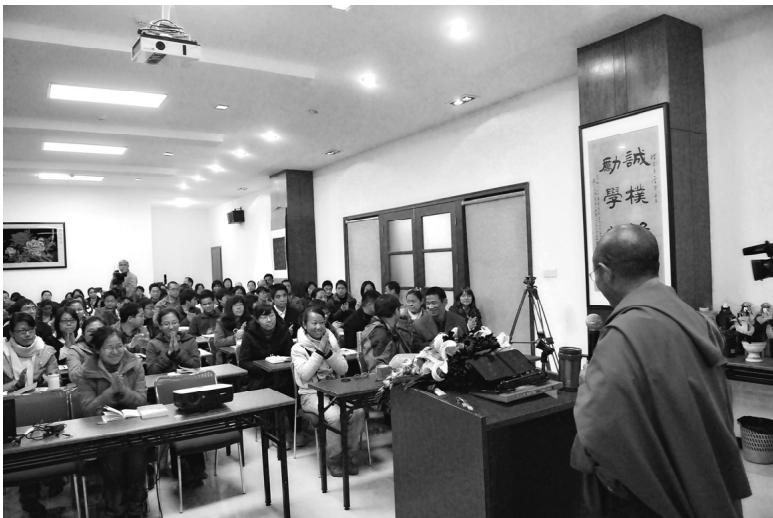
那么,要做好什么思想准备呢?至少要有一种正确的信仰,有个思想寄托。否则,就算你以后在社会上特别风光,到了晚年时,内心也会孤独无依,极其凄凉。所以,我们不能只顾眼前、鼠目寸光,而应该站得高一点、望得远一点,以佛教的智慧来看待自己的生命、看待这个物质世界、看待整个伦理道德。若能如此,你会发现在佛陀智慧的衬托下,一切领域的知识都显得那么渺小。
现在世间有不少出名的畅销书,我每次听说后都很有兴趣,心想一定要看一遍。但我看了以后,说实话还是比较失望,因为这些道理在佛陀的经典中都描述过。这一点并不是夜郎自大、否认事实。我们作为佛教徒,无论是佛教的观点,还是其他宗教或非宗教的观点,只要任何人都没办法推翻,我们就应当承认并接受。不过,在对比了各种各样的知识后,我确实对佛陀的智慧越来越深信不疑。在座的各位不管对此信还是不信,都应当用自己的智慧加以分析。
今天跟大家讲的,基本上就是这些了。希望大家通过这次交流,懂得人生最重要的理念——前后世存在,并要为生生世世的快乐而积累功德资粮,最终趋往解脱之道!
还有一件事情是,大家都知道,最近日本发生了非常严重的天灾人祸,9 级地震、海啸、火山爆发、核泄漏……看了电视的画面,我心里很悲伤。虽然南京人由于历史原因,对日本有一些怨恨,但我们大多数人都是学大乘佛教的,假如易地而处,设想自己被卷在波浪中、感受地震的恐惧,那会是怎样的痛苦?而且有些人生前造了极大恶业,现在突然变成中阴身,连忏悔的机会都没有,来世必定是堕入痛苦深渊。诸如此类的道理一想起来,就会觉得这些人很可怜。
所以,希望大家一起念100 遍观音心咒,回向给日本所有的遇难者,愿亡者得以超度,生者消除痛苦。嗡玛呢叭美吽 吽、嗡玛呢叭美 ……好,谢谢!
听课笔记
登录后可记录与自动保存听课笔记 To log in.